Picture Books (3-6 years)
-
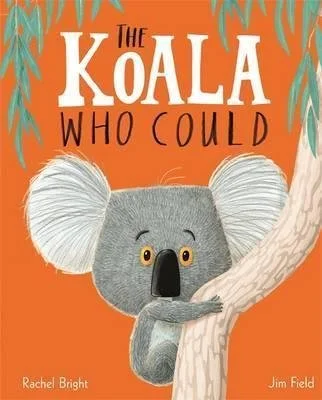
The Koala Who Could by Rachel Bright. Illustrated by Jim Field.
Kevin, a grey koala who likes life exactly as it is, stays high in his tree where nothing ever changes. And when the world beneath him becomes noisy, fast and unfamiliar, he clings to his branch, too frightened to join the other animals having fun below..
Close‑ups of Kevin capture his longing to take part while fear keeps him frozen. Jim Field’s autumnal palette — browns, greens and oranges — unfolds across generous double‑page spreads, gradually shifting into mood panels that echo the changing seasons. The playful typeface supports hesitant readers encouraging them to gently read.
When a woodpecker sends Kevin’s tree crashing down, his friends promise to catch him — but Kevin still holds tight until the branch breaks. Opening his eyes, he finds himself surrounded by kindness. “The worst he could think of had now come to pass and he was JUST FINE. Why, he felt quite first‑class.”
Many anxious children will recognise themselves in this rhyming tale. Its message — transforming “I can’t” into “I can” — is beautifully delivered and it’s exactly the kind of reassurance every parent hopes their child will carry with them. An excellent book choice for a child nervous about starting preschool, primary school, or facing any daunting new experience.
This book is a large paperback edition which I would highly recommend as it makes the artwork feel expansive and immersive.
The Koala Who Could is another standout title from Rachel Bright and Jim Field, joining the excellent The Lion Inside (reviewed on this website) and The Squirrels Who Squabbled.
Orchard Books, 2017.
ISBN 978 1 40833 164 4
📚 Recommended for Ages 3-6 +
-
Little Arty and the Happy Dance written with Erika McGann. Illustrated by Dan Taylor.
This bright, uplifting picture book follows a visit to the park where dance becomes the spark that connects people, animals, and nature, creating a mood of pure happiness.
Artie loves to dance. His friend Lala does not — she arrives at the park feeling low, and everyone they meet seems equally grumpy, from squirrels and ducks to the caretaker. Through playful illustrations, Artie begins to move, hop, shake, and swirl, and gradually the whole park responds. Squirrels start hopping, ducks shake their feathers, and even the caretaker is soon dancing along.
Arthur Gourounlian and Erika McGann shape a strong narrative about how creativity lifts energy, how movement can shift a mood, and how one child’s enthusiasm can impact others. Dan Taylor’s illustrations keep a sense of motion around Artie, using warm yellows and reds balanced with calming blues and greens — perfect colours for young readers. After a series of dancing scenes, the once‑grumpy trees finally open to the sun in a glowing full‑page spread. The final pages present simple dance moves in coloured panels, inviting children to copy them or invent their own.
The clean, rhythmic text supports read‑aloud sessions offering an encouraging step toward independent reading.
📚 Recommended for ages 3-6 +.
Gill Books, 2025
ISBN 978 1804583654
-
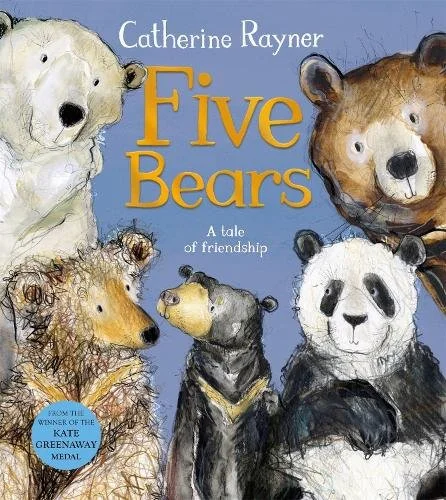
Five Bears: A tale of friendship by Catherine Rayner
This deceptively simple story gently shows how friendships can begin. Five very different bears — a black bear, a curly bear, a black‑and‑white grungy bear, a very big brown bear, and a stuck‑up white bear — meet for the first time. They are completely indifferent to each other, not knowing or liking one another.
The turning point comes when the five bears must work together to solve one bear’s dilemma. The message — “some things are hard on your own” — is gently delivered. Through kindness and shared effort, they discover they “all just like each other”, capturing that warm glow we feel when others treat us with care.
Rayner’s skill lies in the harmony between text and illustration. The bears are drawn in fine pencil lines washed with watercolour, appearing across single‑ and double‑page spreads. The square hardback format is thoughtfully designed, and the colourful maple‑leaf endpapers add warmth at the conclusion of the story contrasting with the earlier whiteness, visually showing the growth of friendship.
Clean white backgrounds give clarity, and the simple, readable text makes this an excellent first book for a beginner reader. A skilfully crafted book, ideal for preparing a nervous child for playschool or school.
📚 Recommended for ages 3-6 +.
-
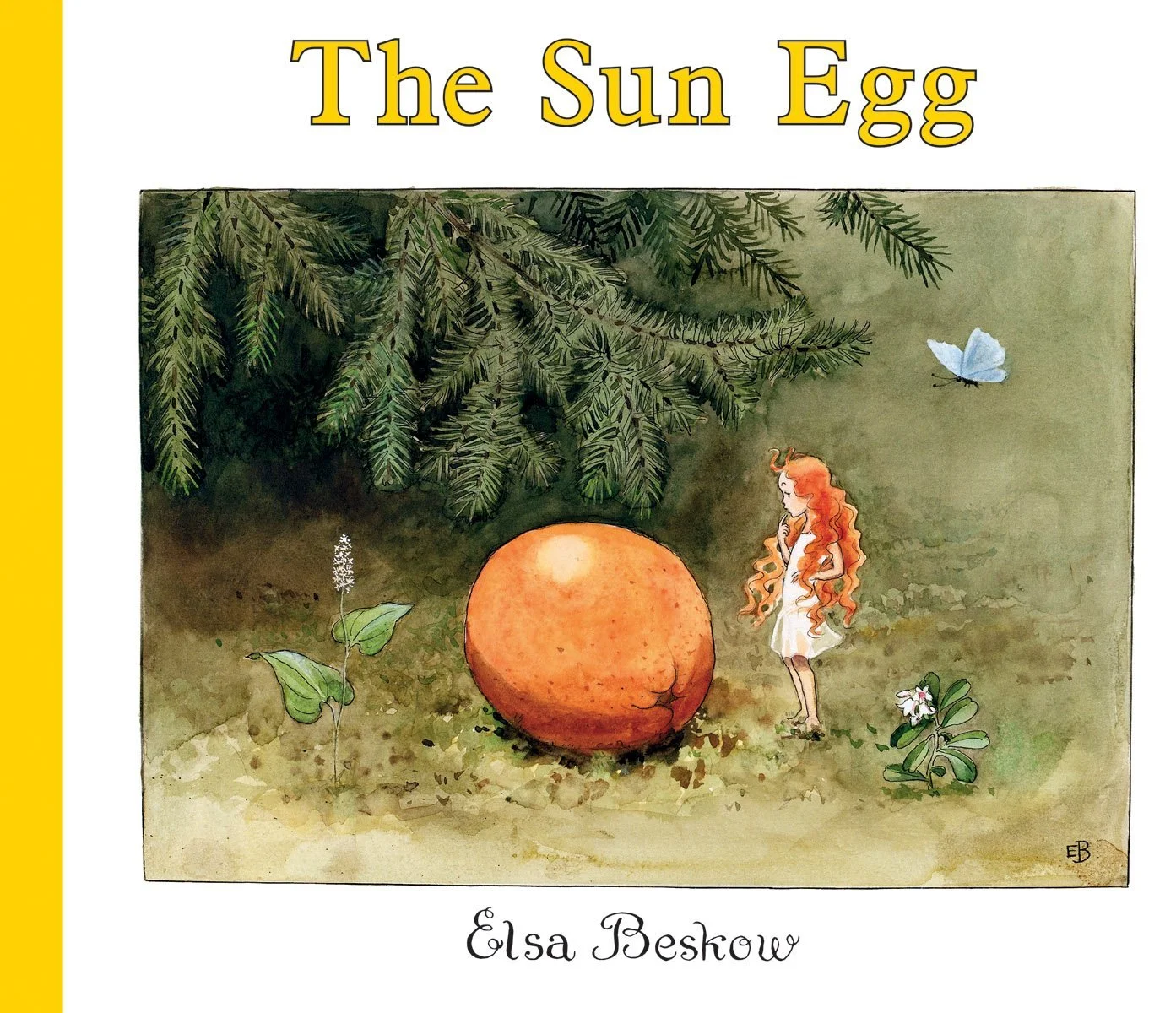
The Sun Egg by Elsa Beskow
This charming picture book follows a little elf who lives in the forest with her woodland friends, welcoming each season with a dance. While exploring one day, she discovers what she believes is an egg laid by the sun. Joined by Larch the joker, Crooked-Root, the gnome who minds the woods, and Happy Frog, whose restaurant has a rule that "guests are forbidden to eat each other," she sets off to solve the mystery.
A well-travelled chaffinch identifies the "sun egg" as an orange, but when a crow swoops down and swallows it whole, the elf is heartbroken. Comfort comes from a mistle thrush, who promises to take her south in autumn where oranges grow.
This is a story of friendship celebrated through the seasons. The final page reveals the orange's true origin, bringing the tale full circle.
Beskow shows us delicate woodland scenes in verdant greens, warm golds and earthy browns, with some finely etched black-and-white drawings. The expressive animals and enchanting forest scenes give this book a timeless quality.
📚 Recommended for ages 3–6
Floris Books. 1st publ. 1932; This edition, 2007 (A mini Elsa Beskow book).
ISBN 978 086315 585 7
Elsa Beskow was born in Stockholm, Sweden in 1874 and published over thirty books in her life, the last at the age of 78. She is often described as Sweden’s Beatrix Potter.
-
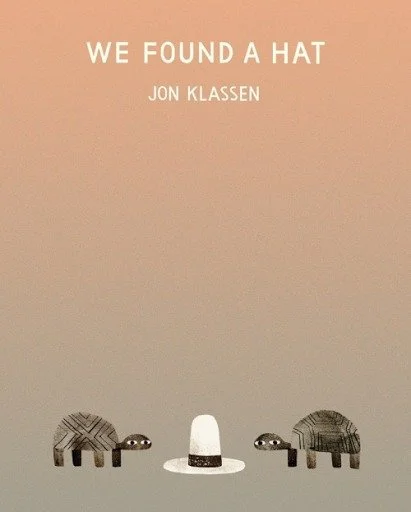
We Found a Hat by Jon Klassen (Trilogy).
Two turtles find a hat in the desert. They both try it on, and it looks good on each of them. Since there is only one hat, they decide to leave it behind and forget about it. But can they?
Klassen tells this gentle, funny story with remarkable restraint. Children will quickly realise what the turtles are really thinking by following their shifting eyes, even when one insists he is thinking of "nothing". The simple illustrations, muted colours and changing light from day to night perfectly complement the understated text, while the final endpapers provide a satisfying conclusion.
This final book in Klassen's hat trilogy, following I Want My Hat Back and This Is Not My Hat, is a masterclass in saying more with less. There is the story told by the words and another revealed through the illustrations. The simple, repetitive text and expressive artwork make it an excellent choice for sharing with young children and for beginning readers, while gently exploring the true meaning of friendship.
Walker Books 2020 (1st publ.2016). Hardback.
📚 Recommended for ages 3–6
ISBN 978 1 4063 9711 6
-
This is Not My Hat by Jon Klassen (Book 2)
Caldecott Medal (USA)
Kate Greenaway Medal (UK)
A tiny fish swipes a hat from a much larger fish and confidently insists he’ll get away with it. “This hat is not mine. I just stole it”. He wrongly assumes the big fish won’t notice and justifies the theft because the hat “fits him just right”. Only the crab knows the truth, and the tiny fish trusts him completely — wrongly, as it turns out. While the tiny fish hides in the plants, the crab points the big fish in his direction. The big fish vanishes into the undergrowth and returns with the hat firmly back on his head. The storyline, muted, earthy palette and stunning patterned endpapers make this a beautiful companion to I Want My Hat Back.
📚 Recommended for ages 3–6
Walker Books, 2012.
ISBN 978 1 4063 5343 3
-
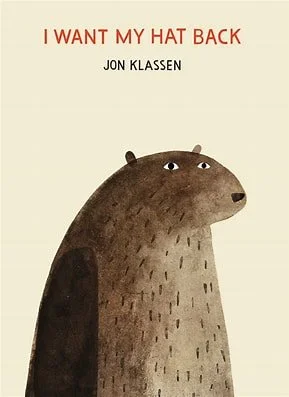
I Want My Hat Back by Jon Klassen (Book 1)
In this deceptively simple picture book, a bear searches for his stolen hat. Along the way he questions a fox, a frog, a rabbit, a tortoise, a snake, an armadillo and a moose. Each, with deadpan eyes, insists they haven’t seen it.
The earthy pastel palette perfectly matches the book’s dry humour. The double‑page spread of the bear lying flat in despair is wonderful, as is the dramatic red page when he realises where he last saw his hat. The close‑up confrontation with the rabbit—still wearing it—is visually comic.
This book is an ideal read‑aloud: big, clear type, very few words per page, and the repeated line “Ok. Thank you anyway” supports early reading. Different text colours signal which animal is speaking.
A small warning: if a young child doesn’t ask about the rabbit’s absence on the final page, I wouldn’t raise it. With older readers, the ending can open a gentle conversation about actions and consequences.
This book is the first in Klassen’s hat trilogy, followed by This Is Not My Hat and We Found a Hat.
Jon Klassen is a Canadian author‑illustrator and former film animator who worked on Coraline (2009). He currently lives in Los Angeles, California. He received the Astrid Lindgren Memorial Award in April 2026 for his contribution to children’s literature.
📚 Recommended for ages 4–6 Walker, 2011
ISBN: 9781 4063 3683 2
-
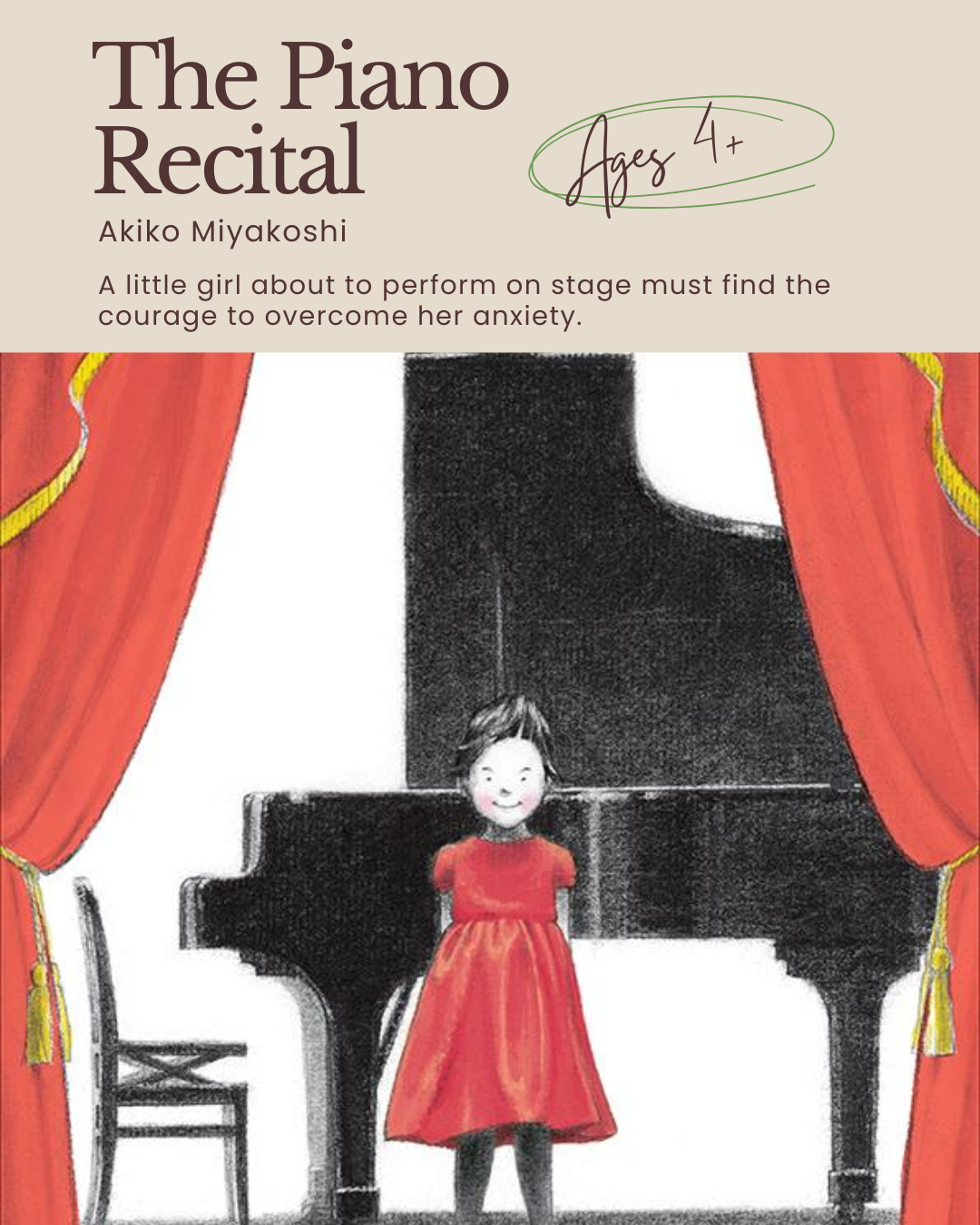
The Piano Recital by Akiko Miyakoshi
In this magical Japanese picture book, a child’s anxiety about performing in her first piano recital is exquisitely captured. The cover shows Momo on stage beside a grand black piano, framed like a theatre set.
On the title page, we see a glum little girl clutching her music. Waiting to perform, her heart is racing as she repeats to herself, “I’ll be okay… I’ll be okay.” While standing there, a “mouseling” appears at her feet, echoing her mantra and inviting her to a recital of its own.
Momo is transported to a tiny theatre within the building, where an audience of mice awaits. As she watches acrobats, dancers, and singers, her tension dissolves. When it is the mouseling’s turn to perform, Momo imagines herself playing the piano—only to realise she is suddenly onstage at her own recital, finishing to warm applause. Imagination gently transforms her fear into confidence.
The stunning illustrations, created with gouache, layer rich tones of pink, red, yellow, and green, against delicate charcoal linework. Subtle use of light and shadow evokes the hushed atmosphere of a theatre, while the main characters stand out clearly in colour.
📚 Recommended for ages 3–6
Kids Can Press, 2019
ISBN 978 1 5253 0257 2
-
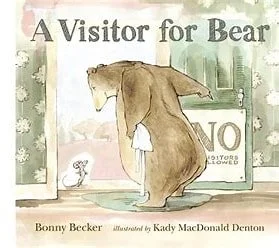
A Visitor for Bear by Bonny Becker. Illustrated by Kady MacDonald Denton
A Visitor for Bear is a delightful story about friendship and acceptance, told with warmth and gentle humour.
Bear does not welcome visitors. When Mouse calls, Bear points to his sign — ‘No visitors allowed’ — and firmly sends him away. Yet inside the house, Mouse keeps popping up in the most unexpected places. Big, bold Bear grows increasingly frustrated with the tiny intruder, who politely apologises each time he reappears.
Bear blocks every possible entrance and finally relaxes, convinced Mouse is gone — until he discovers him in the teapot. In tears and defeated, Bear gives in and invites Mouse to stay for tea. Soon he unblocks the doors and windows and begins to enjoy the little visitor’s company. By the end, Bear is not only reconciled but begging Mouse to stay.
The clear, repetitive storyline — including the refrain describing Mouse as ‘small and grey and bright-eyed’ — makes this especially appealing for emerging readers. Denton’s soft brown and green watercolours beautifully contrast the large, lumbering Bear with the tiny, persistent Mouse. The warm interior scenes add to the book’s cosy charm.
Bonny Becker, an American children’s author, is best known for the Bear and Mouse series, which begins with this title and includes A Birthday for Bear and A Bedtime for Bear. Canadian illustrator Kady MacDonald Denton brings the story to life with expressive ink, watercolour and gouache illustrations.
A heartwarming read to share.
📚 Recommended for ages 3–6
Walker Books, 2009
ISBN 9781406323429 -
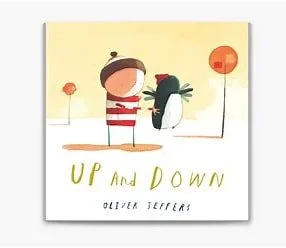
Up and Down by Oliver Jeffers
Up and Down by Oliver Jeffers is a delightful tale of friendship between a boy and a penguin, exploring what happens when they are unexpectedly separated.
A sequel to Lost and Found (2006), the story opens with the boy and the penguin as inseparable friends. When the penguin becomes determined to fly, the boy is equally determined to help him. After a series of failed attempts, they visit a circus in search of a solution. There, the penguin spots a humorous sign advertising the chance to become a “living cannonball” and is launched away, losing contact with the boy. Despite searching everywhere—even among other penguins—the boy cannot find his friend.
As the penguin comes close to achieving his dream of flying, he realises how much he misses the boy and begins to doubt the dream itself. Terrified as he is fired from the cannon, he lands safely in the boy’s arms, discovering that his wings were never meant for flying after all.
Jeffers’s pastel watercolour washes, generous white space and carefully placed text allow the narrative to breathe. The emotions of separation and reunion tug at the heart, while movement—searching, falling, and flying—drives the story. The simple narrative makes this an ideal choice for young children learning to read.
📚 Recommended Reading age: 3-6
HarperCollins Children’s Books, 2010.
ISBN 978 000 726385 1
-
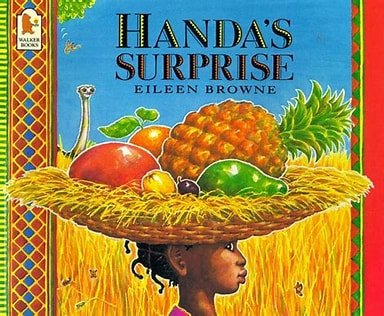
Handa's Surprise by Eileen Browne
Handa’s Surprise by Eileen Browne delights through its rich illustrations and wonderfully simple text. Handa fills a basket with fruit to take to her friend, Akeyo, carefully balancing it on her head as she walks to the village. Along the way, she wonders which fruit Akeyo will like best—banana, guava, orange, mango, pineapple, avocado or passionfruit—unaware that a series of animals are quietly stealing the contents. The gentle twist comes when an antelope, breaking free of its ropes, bumps into a tree and tips tangerines into Handa’s now-empty basket.
Browne’s warm watercolour panels engage young readers while introducing the colours and textures of different fruits. The endpapers clearly name both the fruits and animals, supporting vocabulary development. The authentic Kenyan setting—reflected in clothing, hairstyles, landscape and wildlife—adds depth and richness to this charming tale.
Eileen Browne is a British illustrator and writer.
📚 Recommended Reading age: 3-6Walker Books, 1995 (first published 1994).
ISBN 9780744536348 -
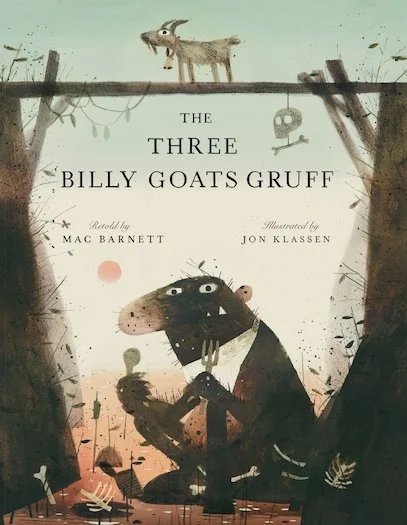
The Three Billy Goats Gruff Retold by Mac Barnett · Illustrated by Jon Klassen
This retelling of the classic Norwegian folk tale blends courage and fun as three billy goat brothers outsmart a greedy, bullying troll.
Each day, a hungry troll lurks beneath a bridge, eager for his favourite meal—billy goat. When the three brothers, small, medium, and large, try to cross, they must rely on cleverness to make it safely to the other side.
Klassen’s muted earthy palette—browns, greys, and greens—captures the dank gloom of the troll’s world under the bridge. His use of perspective is striking: the goats grow in scale with their ages, culminating in a wonderfully oversized big billy goat facing down a suddenly tiny, powerless troll.
Barnett’s simple rhyming text supports early readers and has a lively read‑aloud rhythm: “I am a troll. I live to eat. I love the sound of hooves and feet.” The interplay between spare text and expressive illustrations heightens the tension, much of it unfolding in the shadowy space beneath the bridge.
Children 4+ will enjoy this playful tale, and families and educators will appreciate this book as a gentle introduction to the topic of bullying and the need to stand up for oneself.
📚 Recommended Reading age: 4+
Scholastic · Hardback · 2022
ISBN 978 0702 31903 7 -
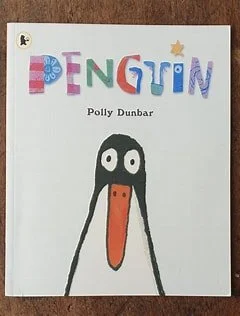
Penguin by Polly Dunbar
Ben receives a penguin as a present, but no matter what he does—singing, dancing, tickling, even sending him to space—the penguin refuses to speak. Ben’s frustration builds into a two‑page tantrum familiar to many parents and children. In anger, he tries to feed the penguin to a lion, but the lion devours noisy Ben instead. At last, the penguin acts—biting the lion’s nose to save his friend.
Dunbar’s clear, simple sentences and repeated refrain, “Penguin said nothing,” makes this an ideal choice for early readers, reinforcing rhythm and language sounds. The stark illustrations—often just Ben and the penguin on a white page—capture silence and tension beautifully.
What sets the book apart is how it invites children to imagine what the penguin might be thinking, until the final twist reveals he has plenty to say. Whether real or imagined, the penguin proves himself a loyal friend. Inspired by a gift from Dunbar’s brother, this playful story celebrates friendship, patience, and imagination.
📚 Recommended Reading age: 3-6
Walker Books, 2017. 10th Anniversary Edition
ISBN 978 1 4063 7331 8
-
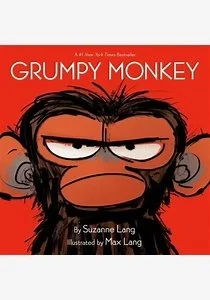
Grumpy Monkey by Suzanne Lang. Illustrated by Max Lang.
The New York Times #1 Bestseller
This delightful picture book explores emotions, friendship, and how activities can help lift a bad mood. Its strength lies in how it playfully validates emotional health, showing that naming a feeling—like being grumpy—can help us sit with it, even if it doesn’t go away.Jim Panzee wakes up grumpy. “The sun was too bright, the sky was too blue and the bananas were too sweet.” His friends notice his hunched posture, bunched eyebrows, and frown. Though Jim tries to smile, “he didn’t feel happy inside.” They suggest singing, jumping, and other mood-lifters, but nothing works. In a striking scene, Jim tells off his friends—grouped on the left side of the page—then runs off alone, a small figure on the right. He later shares his regret with Norman, who’s sore from dancing with Porcupine. Together, they decide it’s okay to be grumpy for a while.
Max Lang’s digitally rendered jungle scenes amplify the humour and emotion, with expressive animal faces and striking layouts. The uncluttered text makes it ideal for pre-schoolers and early readers. A bonus section at the back offers fascinating facts about primates—an unexpected treat.
Puffin Books, 2023.
ISBN 978 0 241 62869 0
Tags: mood, emotions.
-
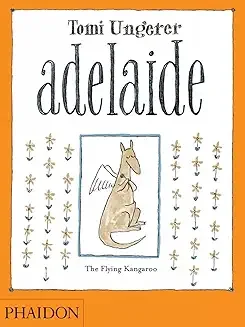
adelaide: The Flying Kangaroo
This whimsical tale follows Adelaide, a kangaroo born with wings. As she grows, so do her wings—until one day, she leaves home, following a plane across the world to places like India. When she arrives in Paris, she decides to stay. A playful moment with a customs official inspecting her pouch sets the tone for her adventures.
Adelaide becomes a music hall sensation and later performs a heroic rescue, saving two children from a burning building. She falls in love with Leon, a fellow kangaroo from the zoo, and they marry.
The pen and watercolour illustrations, rendered in sepia and blue, are simple yet rich in detail. One memorable scene shows Adelaide frightened by the gargoyles of Notre Dame, only to be comforted by angels.
Though the storyline is zany, the deeper theme is about embracing who you are. As Tomi Ungerer himself explains, “I think it’s about the way some children can feel themselves ‘different’ but they can still survive, and more than that, succeed” (Tomi Ungerer: Official Website). That’s a powerful message for young readers.
With its short sentences and expressive images, this book is well-suited to early readers.
Tomi Ungerer (1931–2019) was born in Strasbourg, France, and lived and worked in New York, Canada, Ireland, and Alsace. The Musée Tomi Ungerer opened in Strasbourg in 2007 to acknowledge his legacy, making him the first living artist in France to be so honoured.📚 Recommended for ages 3-6
Phaidon Press Limited, 2011 (1st publ. in German in 1980).
ISBN 978 0 7148 608 3 1
-
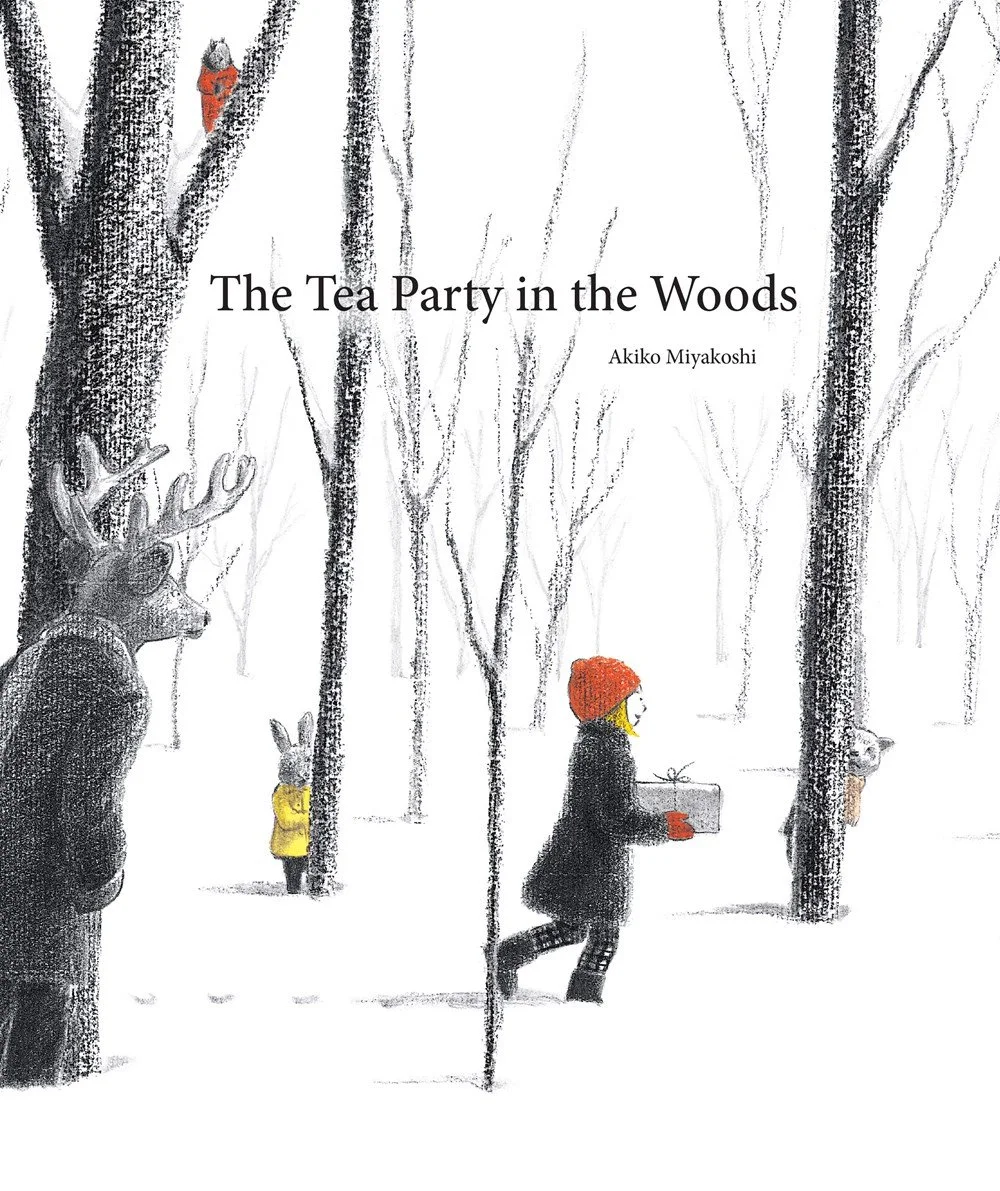
The Tea Party in the Woods by Akiko Miyakoshi
Japan Picture Book Awards Grand Prize in 2011
Kikko’s dad sets out one snowy day to bring a pie to her grandma in the woods which unfortunately he forgets. Dressed in a black coat, red hat, and gloves Kikko hurries after him with the pie. She follows a figure she thinks is her father but, in her hurry, she falls and squashes the pie. Soon she comes to a big house and realises the figure she has been following is not her father but a bear who is going to a tea party! The animals invite her to join them. They replenish her broken pie with a selection of treats and escort her safely to her grandmother’s house to ensure her safety. When a little girl sets out into the woods on her own, we expect darkness but, here the journey becomes light.
Visually, the book is striking: mostly black-and-white charcoal drawings with flashes of red and yellow. The cover shows Kikki in a snow-filled woods with a squirrel high up in a tree while a hare hides behind the trunk of a tree. The simple clear text and the quality of the paper and illustrations make this a tactile delight.
A story of friendship and gentleness, The Tea Party in the Woods is a visual feast that could almost stand as a wordless picture book, so deep is the storytelling in its art.
📚 Recommended for ages 3-6
ISBN 978 1 77138 107 9
Kids Can Press, 2015 (translation), 1st publ.2010 as Mori no Oku no Ochakai e.
-
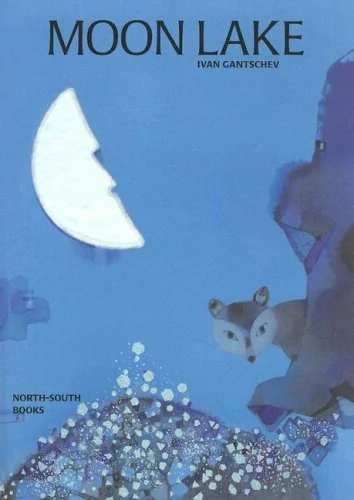
Moon Lake by Ivan Gantschev
This story is about Moon Lake, a secret lake hidden behind a deep canyon, known by few. Legend has it that the moon leaves silver stones after bathing in the lake.
In the mountains, far from the lake, lived an old shepherd and his grandson, Peter, who looked after sheep. Before the old man could tell his grandson how to find the lake, he passed away. Peter continued sheep farming after his grandfather's death. He accidentally finds the lake while searching for a missing sheep. After finding the gemstones, he picks up some and befriends a fox who helps him get home.
Peter faces a threat from the town's selfish people, including the king, if he doesn't lead them to the hidden jewels. Peter is obliged to guide them to the lake. Upon arrival, the men gather the jewels greedily. They die in the ravine after disregarding Peter’s warning to leave before dawn.
Peter goes back to the lake to take jewels for his sheep's ears so he can find them in the dark. He wants jewels in his window for working at night and to help Fox find his home.
In this book, pastel watercolors work well with the beautiful text. The sheep's ear jewels shine at night, and the moon and gemstones reflect light on the pages. Ivan Gantschev's work is a shimmering masterpiece.
Ivan Gantschev (1925-2014) is a Bulgarian-German illustrator and author.
📚 Recommended for ages 4-8
Publisher: North-South Books, 1996
(1st publ. 1981)
ISBN 9 781 55858 598 2
-
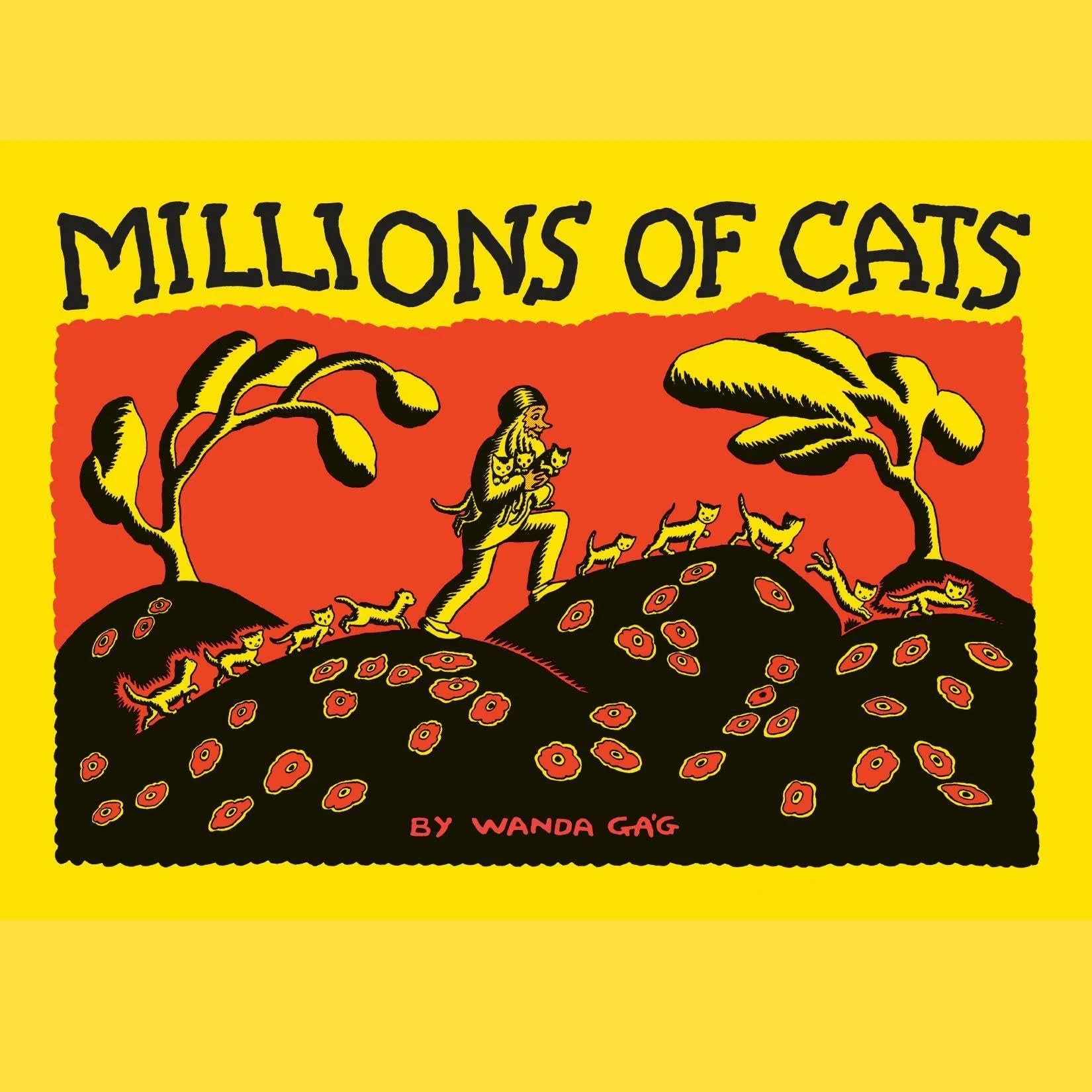
Millions of Cats by Wanda Ga'g
*Winner of the Newbery Award 1929
Millions of cats is a delightfully simple story of a couple who want a cat because they are lonely. The husband’s long journey to find a cat is shown in Wanda Ga’g’s use of both pages. When he returns with “millions and billions and trillions” of cats, which features as a lovely rhyme in the book, the wife must decide which one to keep. Which is the prettiest cat? Or is that what matters most?
This book is the oldest illustrated book in America, first published in 1928. Up to then America mostly imported its illustrated books from the United Kingdom.
Wanda Ga’g was born in rural Minnesota, USA and the Literary Hub describes her as both an “artist and lithographer”. The simplicity of the story is matched by clear type and spacing that allowed for future translation. Indeed, the hand-lettered text designed by Wanda’s brother was a first for picture books.
📚 Recommended for ages 3-6
Puffin Books 2006 (1st publ. 1928)
ISBN 978 014 2407080
-
Can't You Sleep Little Bear? by Martin Waddell and Barbara Firth
*Won The Library Association Kate Greenaway Medal.
This is a delightful story about a bear scared of the dark, representing so many young children’s fears of the dark. Father Bear offers bigger and bigger lanterns within the Bear Cave, but none are big enough to settle the little bear’s anxieties. Finally, father bear brings little bear outside the cave into the darkness and there the brightness of the moon and the stars allay his fears.
The close relationship between Big Bear and Little Bear is conveyed in the bears’ faces. The repetition of words is soothing and is useful for a child learning to read. This is a book that was read repeatedly in our household when the children were small.
Can’t you Sleep Little Bear? is part of the Little Bear series written by Martin Waddell, illustrated by Barbara Firth. Martin Waddell is a prolific children’s writer from Belfast, Northern Ireland while Firth grew up in Hyde, Cheshire in England.
📚 Recommended for ages 3-6
Walker Books 2013 (1st publ. 1988)
ISBN 978 156 402 2622
Tags: Darkness; Nighttime Fears; Bedtime; Picture Books.
-
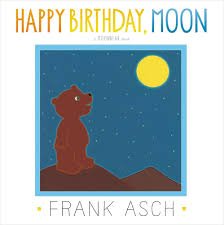
Happy Birthday, Moon by Frank Asch
This gentle classic tells the story of an imagined friendship between a bear and the moon. When Bear decides he wants to give the moon a birthday present, he sets off to ask when its birthday is. As he climbs trees, paddles rivers, and hikes into the mountains, Bear eventually hears an echo—and believes it’s the moon replying.
Through this sweet misunderstanding, Bear learns that the moon also wants a hat for its birthday. He leaves a hat in a tree, and when the moon moves in the sky, it appears to “wear” it. The bear is delighted. The hat falls from the tree due to the wind and when the bear finds it on his doorstep, he believes the moon has ‘gifted’ it to him.
The artwork is simple, reminiscent of colouring book lines with earthy greens, browns, and blues. Circular illustrations echo the moon’s shape, while generous white space and large text make it easy for little readers to follow. The gentle repetition of phrases, due to the echoing sentences, encourages participation and language play—ideal for toddlers and preschoolers.
Written and illustrated by American author Frank Asch, Happy Birthday, Moon remains a quietly magical book more than forty years after it was first published.
📚Recommended for ages 2–6
Picture Corgi Books, 1985 (1st publ. 1984)
ISBN 0 552262 752
-
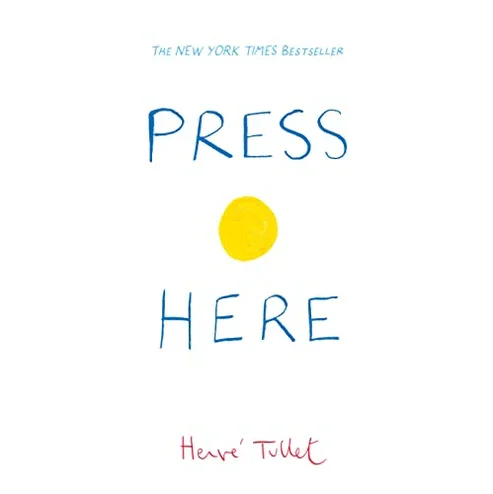
Press Here by Hervé Tullet
Hervé Tullet’s Press Here is more than a read—it’s an experience. A simple tap on a yellow dot becomes an adventure in colour and number that’s full of surprise and delight. Children are invited to shake, tilt, clap, and press their way through an energetic, imaginative journey—no electronics, no flaps—just the magic of print and participation.
As children follow the prompts, they’re not only reading—they’re exploring colour recognition, basic counting, and most importantly, the joy of engaging directly with a book.
The design is bold yet minimal: large dots in primary colours, clean typography, and intuitive directions. The hardback edition, with its glossy pages, feels durable and inviting—perfect for small hands. While there’s also a smaller board-book format, the original size allows the artwork and movement to breathe, making it ideal for story times and shared reading.
One of the loveliest things is watching children who aren’t used to this kind of freedom with books. There’s often a flicker of disbelief—Am I really allowed to do this? —followed by delight. I once shared Press Here with a six-year-old reluctant reader who was instantly captivated. Her joy was so real, she had to take a copy of the book home.
Known in France as the “Prince of Preschool,” Tullet has created over eighty books, but Press Here remains iconic. He refers to his books as “unfinished,” waiting for children to complete them. That spirit of collaboration and play is what makes Press Here so memorable. Tullet has given us a masterclass in interactive storytelling.
📚 Recommended for ages 3–6, especially tactile learners, preschoolers, and reluctant readers.
Chronicle Books, Hardbook, 2011.
ISBN 978 0 8118 7954 5
Tags: Interactive Book, Preschool, Playful
-
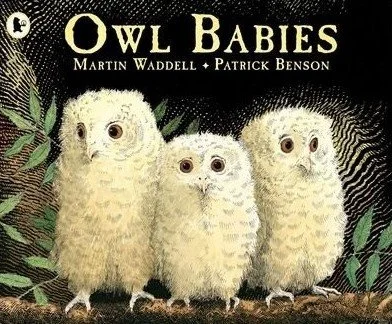
Owl Babies by Martin Waddell. Illustrated by Patrick Benson.
This picture book is a delightful story about three little owls, Sarah, Percy and Bill at night. They wake up in the dark to find their mother gone. They are scared and each expresses their feelings in different ways. Sarah, the eldest baby owl says she’s gone hunting for food. Percy, the middle owl, is also calm. Baby owl Bill is upset “I want my mummy!” Sarah ever comforting suggests they huddle together on one branch.
The text in this picture book is clear expressing the baby owls’ anxiety about their mother who is absent. The text is beautifully supported by the illustrations throughout as in the scene “a big branch for Sarah, a small branch for Percy, and an old bit of ivy for Bill”. The aloneness of the owls is evident in a perspective of three tiny owls in the distance sitting in a verdant green tree landscape.
Patrick Benson’s illustrations in this book are so tactile that you feel you can almost reach out and touch the owls’ downy white feathers, in contrast with their mother’s brown feathers. In a series of close-ups, Benson exquisitely illustrates the baby owls’ fears of abandonment. His use of watercolour and ink to capture the backdrop of forest and night time is magical.
This is a book for babies and toddlers. The large clear type which changes colour cleverly to suit the illustrations would allow children from the age of 3+ to follow the text and makes it a suitable book also for slightly older children learning to read.
Martin Waddell is a prolific children’s writer from Belfast, Northern Ireland. He is especially well known for his collaborations with the illustrator Barbara Firth on the Little Bear series.
Recommended for ages 1–6
The O’Brien Press, Dublin, 1992.
Tags: Separation anxiety; Nighttime; Owls; Literacy.
-
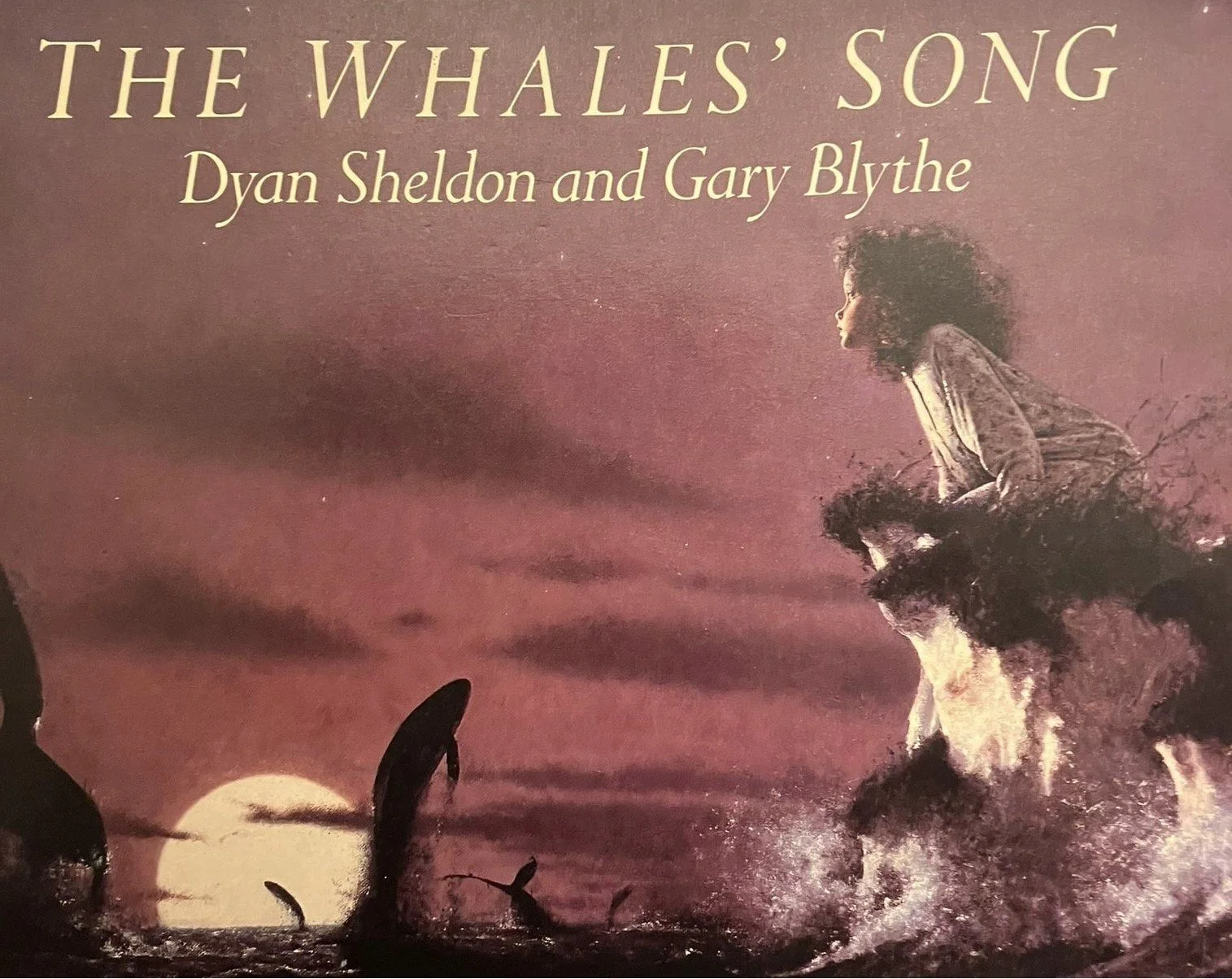
The Whales' Song by Dyan Sheldon and Gary Blythe
The Whales’ Song is a dreamlike picture book that celebrates the wonder of imagination and the enduring mystery of the sea. Lilly’s grandmother tells her enchanting stories of whales—how they sing, how they move, and how, if offered a gift, they might even make contact. Lilly is captivated, her heart opening to the possibility of hearing their haunting songs.
The contrast between the grandmother’s reverence for the whales and the grandfather’s brusque dismissal—“whales are for eating”—introduces a gentle tension, one that plays out quietly in both text and illustration. A particularly striking spread shows the domestic scene from above: Lilly curled up in her grandmother’s lap, the cat dozing nearby, while her grandfather's leg disappears off the edge of the page as he leaves the room. It’s a brilliant use of perspective, full of unspoken feeling.
The illustrations throughout are luminous. Close-up portraits of Lilly and her grandmother feel almost magical in their intimacy, while double-page spreads show the grandeur of the whales framed in white borders. The atmosphere of Lilly’s night-time encounters with the whales is deepened by the evocative use of shade and light. Moonlit oceans shimmer in tones of sepia and cream.
Together, author and illustrator have crafted a story that is a tribute to the animal kingdom, the gift of storytelling, and the space in children’s lives for wonder.
📚 Recommended for ages 3-6
Red Fox (Random House Children’s Books), 1993.
ISBN 0 09973760 4
-
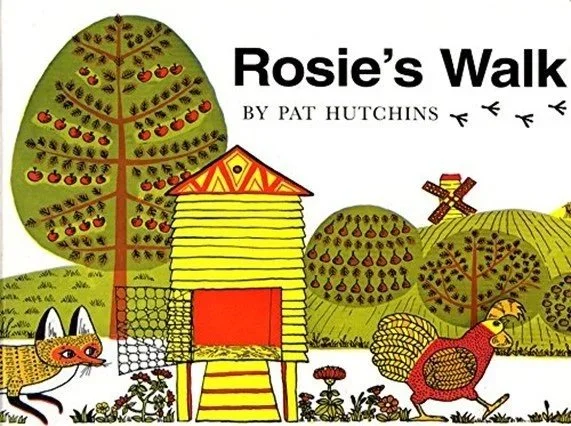
Rosie's Walk by Pat Hutchins
Rosie’s Walk by Pat Hutchins is a deceptively simple fun tale. The premise is straightforward: Rosie the hen sets off for a walk around the farmyard, unaware that a fox is sneaking behind her every step of the way. What follows is a playful sequence of near-misses, as Rosie blithely avoids danger time and again—completely unaware of the chaos unfolding behind her.
The true charm of this book lies in its pantomime-style humour. Children will quickly catch on to the “behind you!” drama on each page, gleefully anticipating what misadventure will befall the hapless fox next. It’s a masterclass in visual storytelling: the text (one sentence) is minimal, often just a word or two per spread, while the pictures carry the full weight of the narrative, creating tension and comic payoff in equal measure.
The colour palette is warm, dominated by sunny yellows, oranges, and earthy tones that evoke a late summer’s day. The illustrations are bold with simple graphics while the large clear font makes this book an excellent choice for beginner readers.
📚 Recommended for ages 3
Puffin Books. 1970 (Ist publ. 1968).
ISBN 014 050032 4