Classic Reads
-
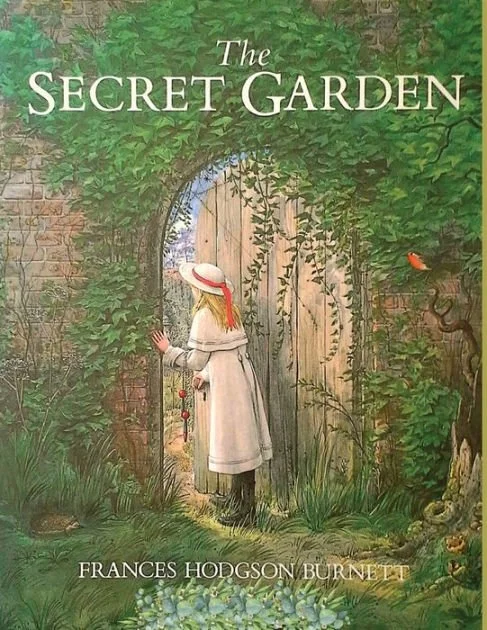
The Secret Garden by Frances Hodgson Burnett
I read this classic children’s novel (first published in 1911) at the age of nine; I think it was the first book I encountered in which the characters were complex human beings who were not consistently ‘goodies’ or ‘baddies’. As a child, I certainly remember finding it strange, yet fascinating, and I returned to it many times over the succeeding years.
Mary Lennox, the main protagonist, is spoilt, selfish, even cruel at times – we are told in the first chapter that she frequently strikes her poor Indian ayah. But when, orphaned in a cholera pandemic, she is sent to England to live with a mysterious (and for most of the novel, unseen) uncle in a huge, rambling manor-house on the Yorkshire moors: she is plunged into a world she does not understand. We live each challenge with her as she tries to cope with unfamiliar people, accents (broad Yorkshire), food, pastimes and environments. We come to see Mary as a lonely, resilient little survivor, someone who desperately wants friends and whose natural curiosity and intelligence has been stunted. She learns to talk to a crusty old gardener, a good-natured but ignorant housemaid, even a cheeky little robin – and eventually, her desire to reach out to the world leads her to discover the dark secrets which Misselthwaite Manor and its grounds are holding.
It’s not a spoiler to say that one of these secrets is a garden (!) but there are many others, and all of them bring Mary to find out about life, love, friendship, sorrow, laughter and the amazing, curative powers of nature. She grows, and so will anyone who reads this marvellous book.
Recommended for ages: 8-12 and for adult.
Reviewed by April Cronin
-
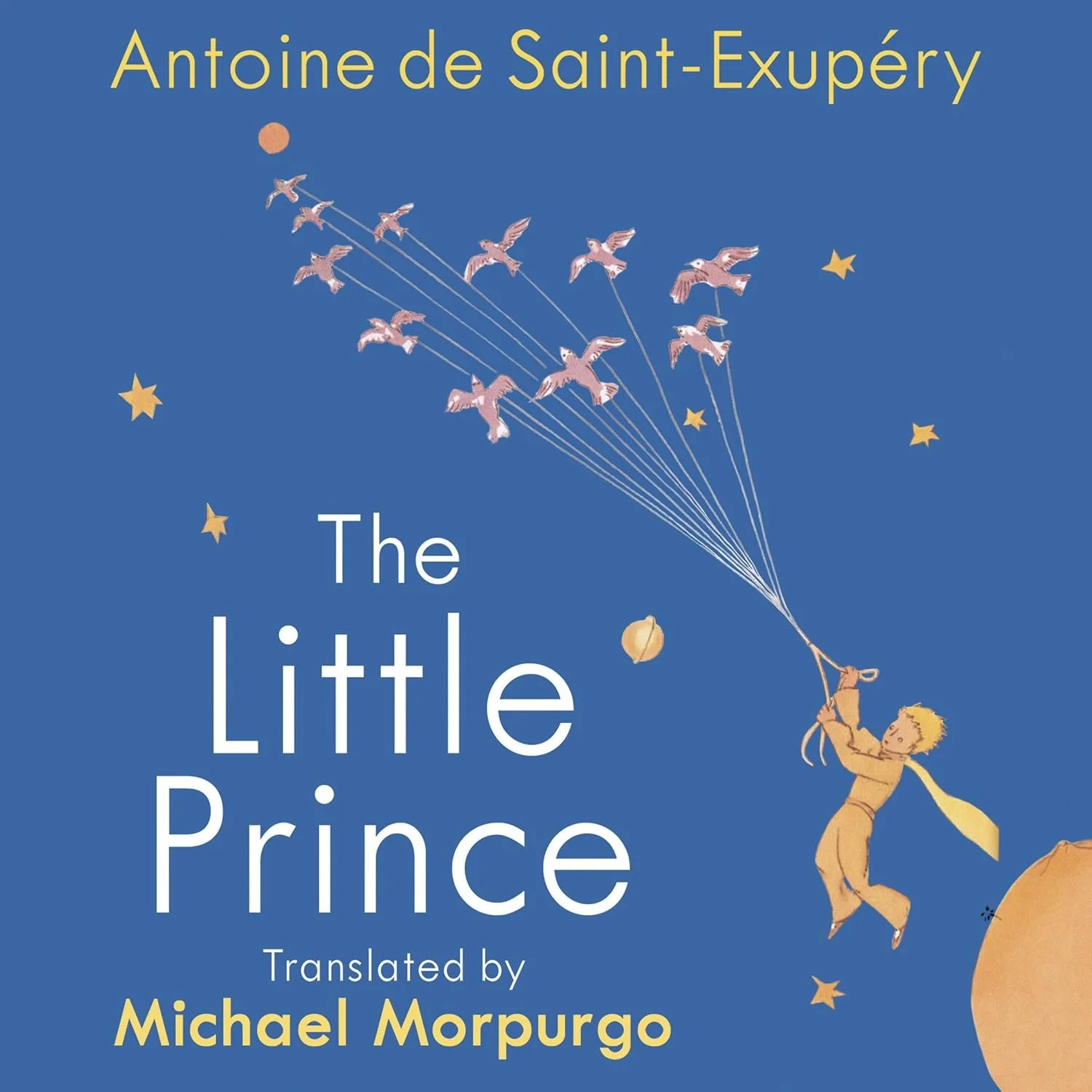
The Little Prince by Antoine de Saint-Exupéry with illustrations by the author. Translated from the French by Michael Morpurgo.
The Little Prince is almost too well-known to require a review. Even better-known are the illustrations. These are water-colour drawings done by the author himself. They are disarmingly simple and reflect the innocence of the little prince who, having left his own tiny planet, is trying to make sense of the adult world.
He makes friends with a pilot – the narrator – who has made an emergency landing in the desert. Over a period of a week he tells the pilot of the other planets he has visited, each inhabited by a single individual. The theme of loneliness is very strong. The little prince finds grown-ups decidedly strange.
Fortunately, the little prince discovers a source of joy having been enlightened by a fox, also seeking companionship.
A French friend says that Le Petit Prince, first published in 1943, is still widely read in France – but more so by teenagers and adults – where it is seen as philosophical. In this context, what Morpurgo has done in his translation is interesting. Morpurgo is, of course, the prize-winning and decorated author of a number of children’s novels.
His use of language is relaxed and fluent, often using expressions a young reader will be comfortable with. He deftly renders what the original French leaves implied in passing, and he softens some of the sadness of the ending. The original French is quite sparing in its use of words; this translation is more expansive and really satisfying.
Young readers and listeners will be drawn in by the illustrations and by the little prince himself. As always, they will take from the book what they need.
For you, however, the knowledge that the author was a pilot and disappeared on a reconnaissance flight during the second World War will add extra poignancy to this classic of French literature.
Vintage Classics (Penguin Random House), 2018 (1st publ.1943).
ISBN 978 1 7848 741 79
Recommended for ages: 7 to adult.
Reviewed by John Corbet
-
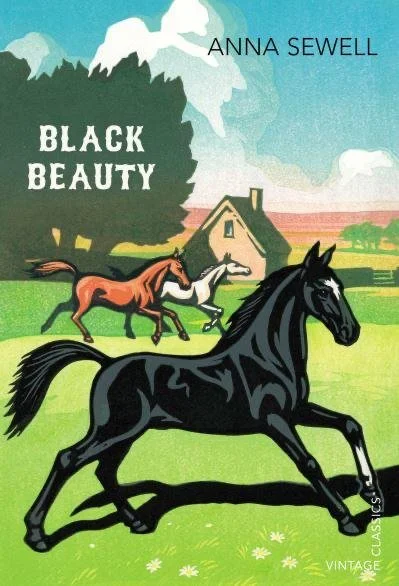
Black Beauty by Anna Sewell
“Black Beauty” is a classic children’s novel written by Anna Sewell and first published in 1877. It is set in Victorian England and told from the unique perspective of the horse. It follows Black Beauty’s journey from his carefree days as a young colt on an English farm through the many homes and owners he encounters, some gentle and loving, others harsh and cruel. I particularly enjoyed that the whole story is seen through Black Beauty’s eyes. I believe this makes the book especially engaging and moving, allowing readers to experience his joys, struggles, and the lessons he learns about people and kindness.
What Readers Should Know:
Readers should be aware that the book includes sad and realistic scenes, particularly the death of Black Beauty’s friend, Ginger. While this can be upsetting, it provides an opportunity to talk with children about empathy and loss.
I liked the pace of the book, the short chapters make it easy to read and the story moves along at an active but comfortable rhythm. Sewell’s writing balances warmth and realism beautifully. The story touches on the harsh realities of life, showing that even those who are hard-working and kind can face difficult times. It’s hard not to feel sympathy for Black Beauty, the other horses, and some of the human characters. Yet, despite its sadness at times, the book ultimately leaves you feeling hopeful, reminding readers that even small acts of kindness can make the world a better place.
There are many important messages woven throughout the story. While Anna Sewell originally wrote Black Beauty to encourage people to treat horses with compassion, its message clearly extends to people as well. The story shows the importance of being kind to all living creatures and treating others as you wish to be treated. It reminds readers that their actions have consequences and that even small acts of kindness can make a big difference. Through its characters, the book also encourages readers to speak up against cruelty or unfairness and to avoid judging others without understanding their story, since behaviour often reflects past experiences. Although Black Beauty is firmly rooted in the Victorian era, its themes of compassion, justice, and empathy remain just as relevant today. I believe that it continues to inspire readers to treat all living beings with care and respect, proving that true kindness never goes out of style.
The language level is suitable for confident readers aged around 8–12, though younger children can enjoy it as a read-aloud with adult support, as some of the vocabulary and historical references may be challenging. The writing style is gentle, descriptive, and deeply emotional, with a moral tone that encourages reflection and discussion.
Overall, Black Beauty remains a timeless and heartfelt read that adults and children can enjoy together, both as an engaging story and as a powerful exploration of compassion, courage, and the difference kindness can make in the world. As an avid reader and animal-lover it is a book very close to my heart. I hope you and your children enjoy it too.
Vintage, 2012
ISBN 978 0 09957 2930
Recommended for ages: 8-12 and adult.
Reviewed by Mary Mullaney
-
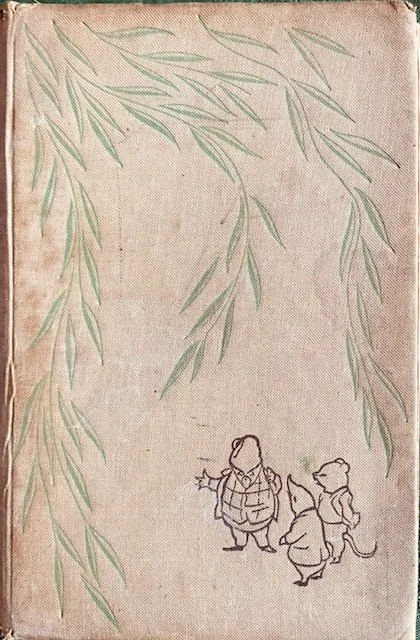
The Wind in the Willows by Kenneth Grahame. Illustrated by Ernest H. Shepard.
Any experience of this much-loved classic will be memorable. Part of its appeal is the illustrations the tale has inspired. Pick an edition whose illustrations respect the Edwardian era when, for example, the appearance of a motorcar on a rural road was an event.
What Readers Should Know:
“The Wind in the Willows” was first published in 1908 and early readers wondered-with some justification - if it was aimed at children or at adults. Certain passages and chapters may discourage an impatient reader, and they may wish to stick to the adventure chapters. For this reason, an abridged version may be a good choice. Ernest Shepherd’s pen-and-ink drawings were first added to this book in 1931.
The story concerns the friendship and adventures of a disparate group of four friends, Ratty, Mole, the serious Badger and the improvident, impetuous, conceited but lovable Mr Toad. Toad, a car fanatic is in frequent need of rescuing from his silly ideas ending up in a dungeon at one point. He finds himself in the end incredibly grateful for the loyalty of his more sensible friends (who have their own funny moments too).
The whole book is told fluently and affectionately, affection for the characters and for the natural world, for the balm of friendship and the comforts of home.
Children take from a book what they need! They will glide over words difficult in themselves, but which become easier in context. [Assess this choice without context: peremptory, provender, paroxysm, plausible, avidity, artifice, epitome and antimacassar!]
What children may not need are long digressions from the storyline. The chapter "Dulce Domum " spends perhaps too long focusing on the reassuring comforts of home; "The Piper at the Gates of Dawn" suggests a transcendent presence in nature (but read it yourself from the beauty of the writing) ; the Sea Rat's lengthy catalogue of his jolly times at sea will try any reader’s patience - "Wayfarer All". Just this once: "Skip to the next chapter."
The characterisation is deft. Ratty is busy and practical. Mole is quieter, more of a follower but one who proves cleverer in the end. Badger is respected, fatherly, and concerned for his friends (but they may have to wait till he has safely hibernated or has had his forty winks), And Toad - well, Toad is himself.
This book, despite the digressions, is great fun. It will leave children with enduring memories of the four friends, of life on the river, of the scary Wild Wood and of the escapades of Toad disguised as a washerwoman, and with the memory of the fun illustrations the book has inspired.
The Reprint Society London (1954). Newer editions are available.
Recommended for ages: 8-12 and adult.
Reviewed by John Corbet.