Picture Books for Older Readers (7+)
-
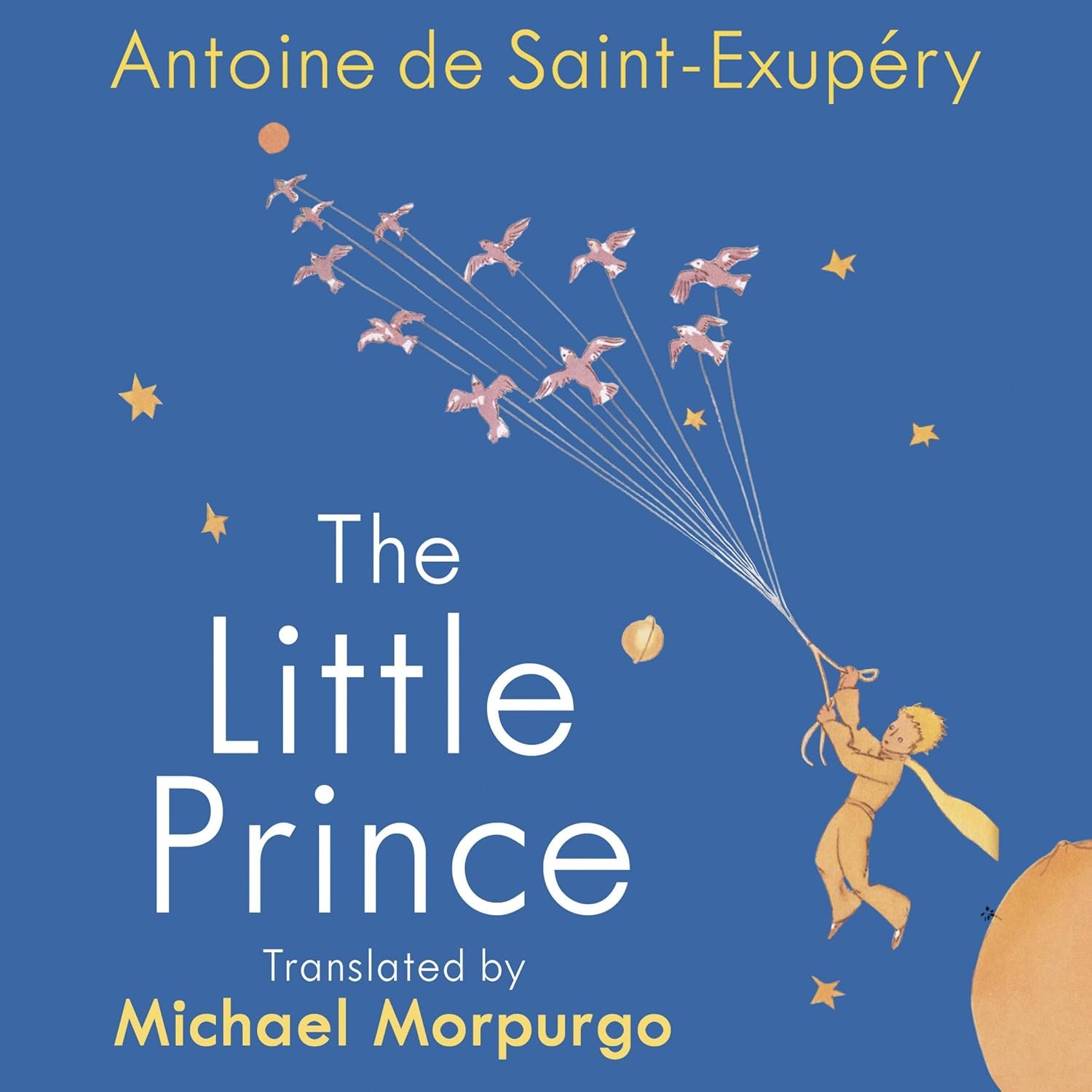
The Little Prince by Antoine de Saint-Exupéry with illustrations by the author. Translated by Michael Morpurgo.
The Little Prince is almost too well-known to require a review. Even better-known are the illustrations. These are water-colour drawings done by the author himself. They are disarmingly simple and reflect the innocence of the little prince who, having left his own tiny planet, is trying to make sense of the adult world.
He makes friends with a pilot – the narrator – who has made an emergency landing in the desert. Over a period of a week he tells the pilot of the other planets he has visited, each inhabited by a single individual. The theme of loneliness is very strong. The little prince finds grown-ups decidedly strange.
Fortunately, the little prince discovers a source of joy having been enlightened by a fox, also seeking companionship.
A French friend says that Le Petit Prince, first published in 1943, is still widely read in France – but more so by teenagers and adults – where it is seen as philosophical. In this context, what Morpurgo has done in his translation is interesting. Morpurgo is, of course, the prize-winning and decorated author of a number of children’s novels.
His use of language is relaxed and fluent, often using expressions a young reader will be comfortable with. He deftly renders what the original French leaves implied in passing, and he softens some of the sadness of the ending. The original French is quite sparing in its use of words; this translation is more expansive and really satisfying.
Young readers and listeners will be drawn in by the illustrations and by the little prince himself. As always, they will take from the book what they need.
For you, however, the knowledge that the author was a pilot and disappeared on a reconnaissance flight during the second World War will add extra poignancy to this classic of French literature.
Vintage Classics (Penguin Random House), 2018 (1st publ.1943).
ISBN 978 1 7848 741 79
Reviewed by John Corbet
-
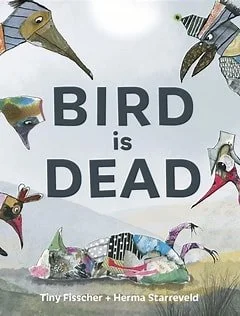
Bird is Dead by Tiny Fisscher. Illustrated by Herma Starreveld.
This thoughtful picture book offers a grounded, child‑friendly introduction to death. Unlike many titles that focus solely on absence or grief, this story also addresses the process of dying, told through a group of birds whose friend has died.
Despite the stark title, the tone is gentle and often humorous. The concise text gives space for a range of emotions—confusion, anger, sadness—and acknowledges that friends and even rivals may grieve differently. The narrative moves naturally through the stages of loss, right through to the bird’s burial, with small arguments and honest reactions that keep the story rooted in real life.
The book opens the door for meaningful conversations about what it means to be dead and how we feel when someone dies.
Herma Starreveld’s muted backgrounds and richly collaged birds create a striking visual contrast, revealing the sensitivity of a therapist‑turned‑artist. The harmony of text, illustration, and white space elevates this book into something quietly profound and could be used as a tool for grief for children of different ages depending on the child’s emotional makeup.
Greystone Books, Hardback, 2024
ISBN 978 1778 4011 76
📚 Recommended for age 6+
Tags: Picture books; Feelings and emotions; Loss and grief
-
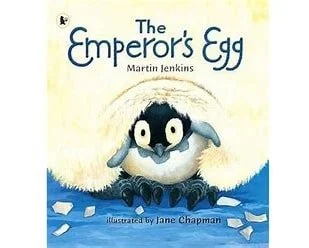
The Emperor's Egg by Martin Jenkins. Illustrated by Jane Chapman.
Non-Fiction Picture Book
This engaging non-fiction picture book introduces children to the remarkable life of the Emperor penguin—the only penguin to breed in Antarctica’s midwinter.
The story highlights the extraordinary role of the father penguin, who shelters the egg under his tummy for two long months without food, while the mother hunts at sea. Jenkins’ simple, fact-filled text makes complex natural history accessible, while Jane Chapman’s illustrations bring the icy landscape to life. The father guarding the egg in a double-page spread is both majestic and moving, while the blue-and-white snowscapes framed in orange panels add visual drama.
Children will be fascinated to learn that the father produces milk to feed the chick until the mother returns, when the pair reunite with their unique call. The book balances scientific accuracy with storytelling charm, making it a rare and valuable example of non-fiction for young readers.
Martin Jenkins, a conservation biologist, has also written Fly Traps! Plants that Bite Back and Chameleons Are Cool, likely lookout reads for children who enjoy this book.
Walker Books, this edition 2008 (1st publ.1999).
📚 Recommended for age 6+
ISBN 978 1 4063 1301 7
-

Stopping by Woods on a Snowy Evening by Robert Frost. Illustrated by P.J. Lynch
In this famous poem by Robert Frost, PJ Lynch, an Irish illustrator depicts a rider’s visit to a snowy wood. Stillness pervades the wood. The horsewoman dismounts, drawn into the landscape.
‘The only other sound’s the sweep of easy wind and downy flake.’
The horse shakes his harness, puzzled by the halt in the woods. The woman, momentarily stilled, realises she must move on as she has other business to attend to. The question of her destination remains unknown.
The art reflects the poem’s mood with blue and green and more than a hint of snow. PJ Lynch’s snow drawings are in a league of their own. His watercolours, which are exquisite and atmospheric, enrich the poet’s words. His talent is such that the beauty of the pages without words equals that of the ones with words. His sensory image of the girl nuzzling the horse’s mane when she stops in the woods forms the book cover.
This is a great early introduction to a poem many of us learned in school. For some reason, I never imagined the rider as female when I was a child hearing this poem.
Robert Frost (1874-1963), a highly respected American poet, won the Pulitzer Prize for Poetry four times.
📚 Recommended for ages 6–older
Walker Books, 2022.
ISBN 978 1 5295 0634 1
-
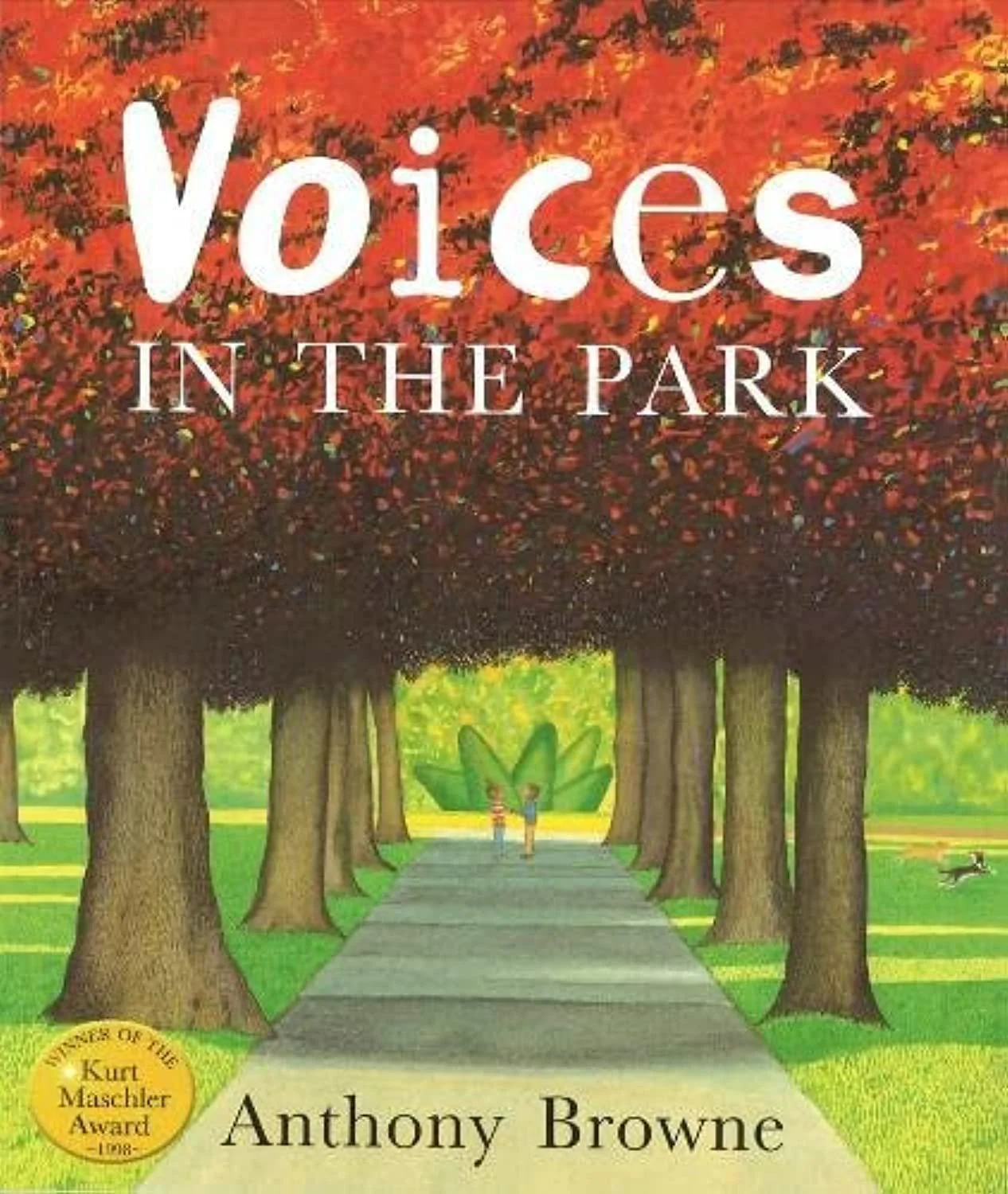
Voices in the Park written and illustrated by Anthony Browne
Winner of the Kurt Maschler Award 1998.
Anthony Browne’s Voices in the Park tells one story from four different points of view — two parents and their children — during a simple trip to the park. His drawings are of gorillas (representing people), in line with Anthony Browne’s love of gorillas whom he sees as both strong and gentle.
Each “voice” looks and sounds different. The rich mother’s world is shown against warm autumnal colours, her snobbishness apparent in how she treats Charles, her son and others.
Smudge, the cheerful daughter of an unemployed father, is drawn with bright spring colours. Her father’s sadness and struggle with unemployment are shown in bleaker scenes, but his mood lifts when he spends time with his daughter.
Browne’s pictures are full of hidden meanings and surreal details. The way he uses shadow, repeated symbols (like the mother’s red hat), and strange park scenes helps explore deeper ideas — such as class differences, loneliness, and the power of friendship.
The two dogs, Victoria and Albert (note the names!), quickly become friends, reflecting how the children, Charles and Smudge, slowly build their own friendship despite their parents’ differences.
This book can be enjoyed on many levels: as a simple story about a park visit, a reflection on social class and empathy, or a reminder that children can bridge gaps that adults often can’t. It’s a powerful picture book for both children and adults to share and discuss and would be wonderful for use in a classroom.
Anthony Browne has won many major awards, including the Kate Greenaway Medal (twice), the Kurt Maschler Award (for this book), and the Hans Christian Andersen Award — the first British illustrator to receive it since 1956.
📚 Recommended for ages 7 to adult
Picture Corgi Books, 1999 (1st publ. 1998)ISBN: 9780552545648
-
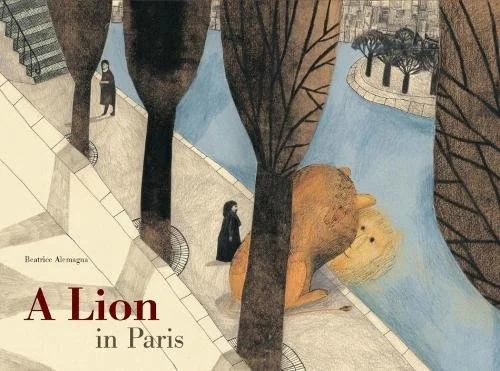
A Lion in Paris by Beatrice Alemagna
Bologna Ragazzi Special Mention Award 2014
This is a picture book that works for many ages. For young children, it’s the story of a lion lonely in his grasslands who heads to Paris for an adventure. For older readers, it’s a gentle reflection on what it feels like to be far from home or grow up in a different place that is not home.
The lion arrives at the Gare de Lyon “without any luggage,” strolling through the station with his paws behind his back. Alemagna’s mix of pencil drawings, collage, and photographs bring Paris to life — everyday details like a man in a waistcoat or a smiling passer-by gives each page warmth and realism.
We follow the lion through the city: to the Café de Flore, where he worries he’ll scare people (though they barely notice him); to the bakery, where baguettes look to him like “strange swords”; to the metro, where his roar is swallowed by the crowd. He feels invisible, lost in the bustle.
Rain soaks him, his golden body fading to grey. But slowly, Paris softens: the Mona Lisa smiles at him (and he returns a whimsical look!), the Eiffel Tower offers a new view of the city, and people begin to wave from their windows. By the end, the lion has found his place — climbing onto a plinth at a crossroads, greeted by the honk of passing cars and a feeling of belonging.
Alemagna’s art is playful, layered, and beautiful. Warm tones of orange, brown, and red give the city a glow, while the design of the text makes it easy and enjoyable to read aloud. This is a book about finding your place in a city, told with great tenderness.
📚 Recommended for ages 5+ to adult
Tate Publishing, 2014.
ISBN 978 1849 7617 10
-
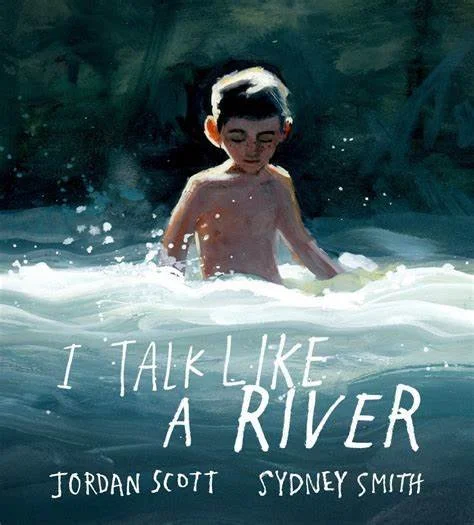
I Talk like a River by Jordan Scott. Illustrated by Sydney Smith
This is a moving, poetic picture book story about a boy who struggles with a stammer. His world feels heavy with silence and shame: classmates laugh, certain letters trip him up, and speaking aloud is terrifying. Sydney Smith’s blurred, expressive artwork mirrors the boy’s feelings of isolation.
One morning, after a particularly hard start, his father takes him to the river. Watching the bubbling, churning water, the boy hears his father’s words: “You speak like a river.” The metaphor changes everything. His voice is not broken — it is natural, alive, and strong.
Jordan Scott’s spare, lyrical text (he is a poet himself) is paired perfectly with Smith’s luminous art. The river spreads across the pages in breathtaking washes of colour and movement, offering both beauty and comfort.
In his note at the end, Scott shares that the story comes from his own childhood experience of stammering. His honesty gives the book extra weight, making it not just a story but also a gift to children who need to see themselves on the page.
📚 Recommended for ages 5+ to adult
Neal Porter Books, 2020
ISBN 978 0 8234 4559 2
-
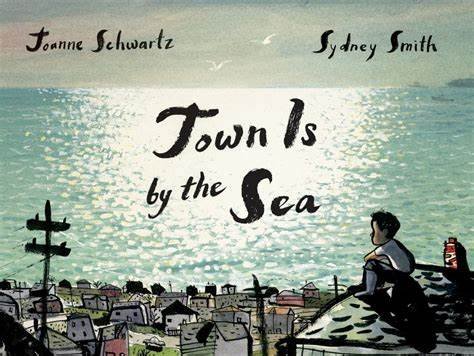
Town is by the Sea by Joanne Schwartz. Illustrated by Sydney Smith
*Kate Greenaway medal winner
*A New York Times Best Illustrated Children’s Book
This quietly powerful picture book tells the story of a boy growing up in a small coastal mining town. His father goes to work every morning to dig for coal beneath the sea while the boy spends his day above: on a swing, listening to gulls and dogs, visiting his grandfather’s grave.
The boy’s senses are on high alert:
"First I hear the seagulls… a dog barking, a car goes by on the shore road, someone slams a door and shouts good morning."The rhythms of childhood — small observations, daily routines — are shadowed by the reality that mining is the work passed from father to son. The boy’s future feels both inevitable and unspoken, as steady as the sea that surrounds the town.
Sydney Smith’s illustrations capture both expansiveness and intimacy: double-page spreads of the glittering sea, contrasted with close domestic details like coats hanging in a row or a cat perched above. Light and dark, above and below, child and adult life — all echo through the images.
The text is simple but lyrical, perfectly pitched for reading aloud. It opens space for gentle conversations about family, work, and the things children inherit from the generations before them.
📚 Recommended for ages 6–older
Walker Books, 2017
ISBN 978 1 4063 7886 3
Picture Books for Older Readers (7+)
-
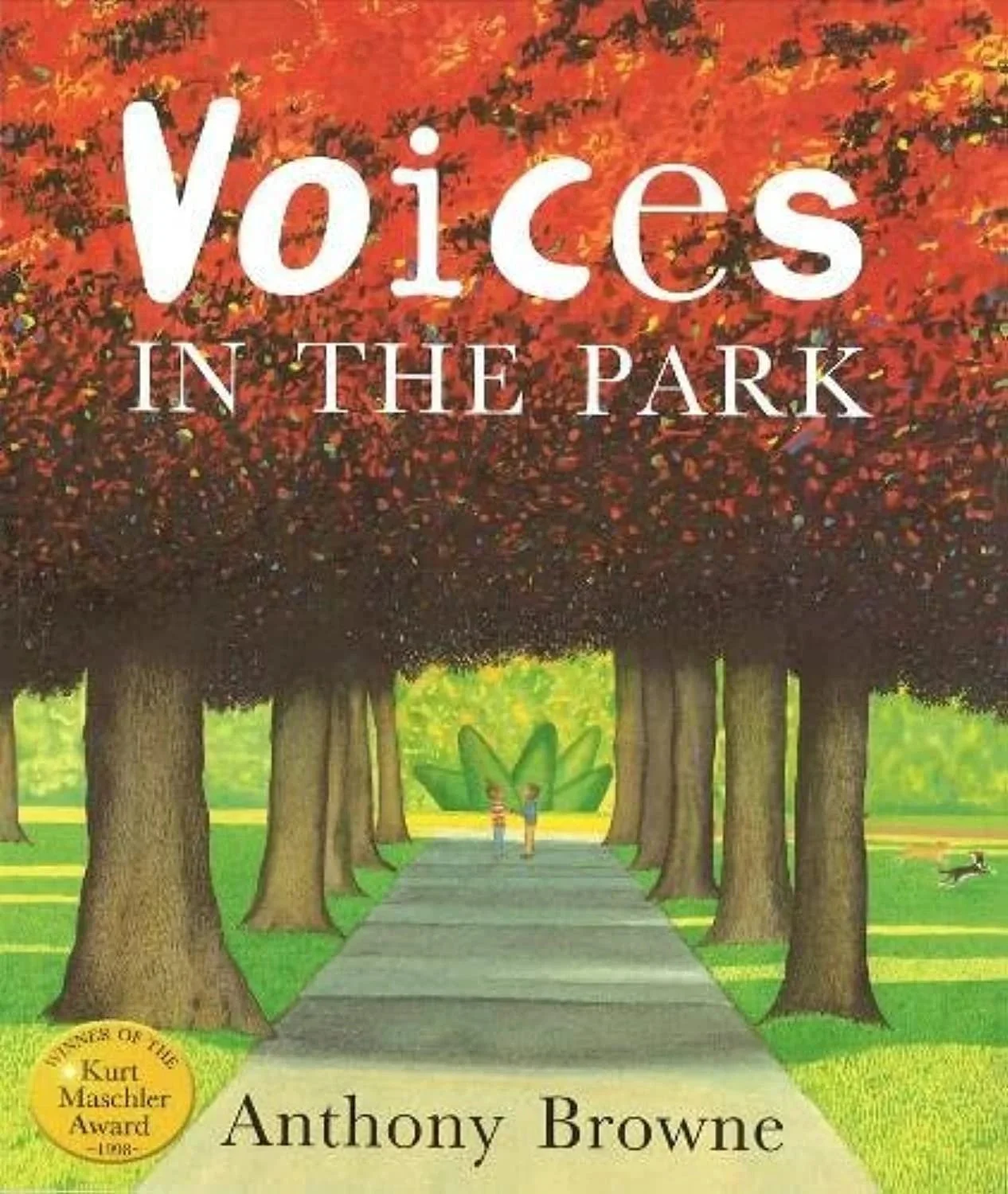
Voices in the Park by Anthony Browne
Winner of the Kurt Maschler Award 1998
Anthony Browne’s Voices in the Park tells one story from four different points of view — two parents and their children — during a simple trip to the park. The characters are gorillas, used to represent people and their emotions in line with Anthony Browne’s love of gorillas.
Each “voice” looks and sounds different. The rich mother’s world is shown against warm autumnal colours, her snobbishness apparent in how she treats Charles, her son and others.
Smudge, the cheerful daughter of an unemployed father, is drawn with bright spring colours. Her father’s sadness and struggle with unemployment are shown in bleaker scenes, but his mood lifts when he spends time with his daughter.
Browne’s pictures are full of hidden meanings and surreal details. The way he uses shadow, repeated symbols (like the mother’s red hat), and strange park scenes helps explore deeper ideas — such as class differences, loneliness, and the power of friendship.
The two dogs, Victoria and Albert (note the names!), quickly become friends, reflecting how the children, Charles and Smudge, slowly build their own friendship despite their parents’ differences.
This book can be enjoyed on many levels: as a simple story about a park visit, a reflection on social class and empathy, or a reminder that children can bridge gaps that adults often can’t. It’s a powerful picture book for both children and adults to share and discuss and would be wonderful for use in a classroom.
Anthony Browne has won many major awards, including the Kate Greenaway Medal (twice), the Kurt Maschler Award, and the Hans Christian Andersen Award — the first British illustrator to receive it since 1956.
📚 Recommended for ages 7 to adult
Picture Corgi Books, 1999 (First published 1998)
ISBN: 978 05525 4564 8 -

Intermediate
What should we know about the services you provide? Better descriptions result in more sales.
-

Advanced
What should we know about the services you provide? Better descriptions result in more sales.